
Abrasive Finishing Disc: How to Choose the Right One
Discover expert tips on abrasive finishing disc how to choose options for your dental clinic and lab in Pakistan.
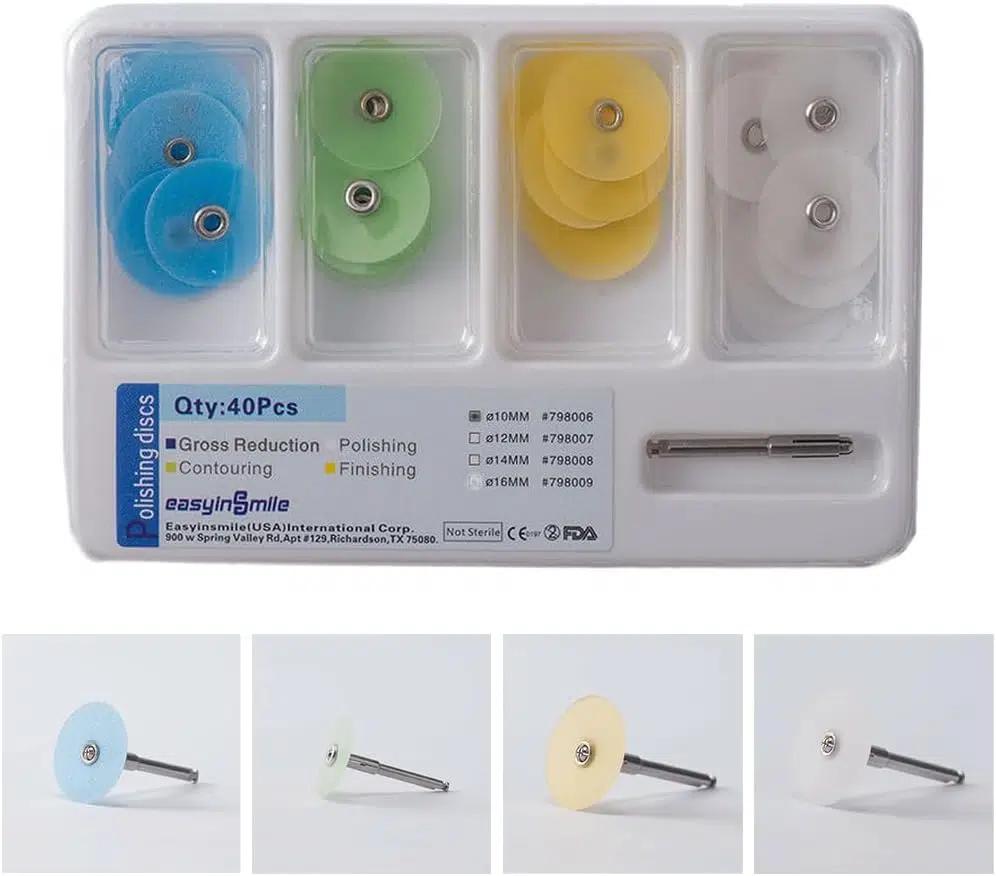
Table of Contents
- Abrasive Finishing Disc: How to Choose the Right One
- Understanding Disc Materials and Backing Types
- Paper vs. Polyester and Plastic Backings
- Abrasive Mineral Composition
- Grit Sizes and the Step-by-Step Finishing Sequence
- Coarse and Medium Grits for Contouring
- Fine and Superfine Grits for High Gloss
- How to Choose the Right Disc for Your Practice
- Evaluating Diameter and Thickness
- Mandrel Compatibility and Shank Design
- Price in Pakistan: Dental Market Overview
- Cost Drivers and Quality Variations
- Budgeting for Clinic Efficiency
- Frequently Asked Questions
- Can abrasive finishing discs be autoclaved and reused?
- What is the ideal handpiece speed for composite finishing?
- How do I prevent scratching the adjacent tooth during interproximal finishing?
- Are snap-on mandrels better than screw-type mandrels?
Abrasive Finishing Disc: How to Choose the Right One
When stocking a dental clinic or laboratory in Pakistan, practitioners often ask about abrasive finishing disc how to choose the correct model for composite restorations, crowns, and bridge adjustments. Achieving a high-luster, natural-looking polish on dental surfaces requires precision tools that balance cutting efficiency with surface smoothness. Selecting the wrong grit size or backing material can lead to scratched restorations, uneven margins, or patient discomfort during the contouring phase. To simplify your procurement process, our marketplace offers a reliable Abrasive Finishing Disc designed for consistent clinical performance across various restorative materials. In this guide, we break down everything you need to know about grit sizes, mandrel compatibility, backing materials, and pricing to help you make informed purchasing decisions for your practice.
Understanding Disc Materials and Backing Types
The physical foundation of any finishing accessory dictates how it interacts with enamel, dentin, composite resins, and ceramics. Understanding these material properties helps clinicians minimize chair time and achieve predictable results.
Paper vs. Polyester and Plastic Backings
Paper-backed variants are traditional and offer excellent flexibility, allowing the material to contour easily around complex interproximal and facial line angles. However, paper tends to lose structural integrity when exposed to excessive moisture or cooling water sprays during high-speed rotation. Conversely, polyester or plastic-backed versions provide superior tear resistance and dimensional stability under wet operating conditions. They do not shred easily when contacting sharp enamel margins or metal matrix bands.
Abrasive Mineral Composition
Aluminum oxide remains the gold standard for resin composites and hybrid restorative materials due to its ability to fracture cleanly, exposing fresh cutting edges. Silicon carbide offers a harder, sharper cut, making it ideal for adjusting ceramics or hard acrylics. Diamond-impregnated options provide aggressive reduction for heavy contouring but require a lighter touch to avoid deep gouging. When working adjacent to soft tissues, pairing your rotary instruments with reliable Mouth Props ensures patient comfort and accidental tissue trauma prevention.
Grit Sizes and the Step-by-Step Finishing Sequence
Finishing and polishing are sequential processes that move progressively from coarse material removal to ultra-fine surface smoothing. Skipping intermediate steps inevitably leaves micro-scratch patterns that accumulate plaque over time.
Coarse and Medium Grits for Contouring
Coarse and extra-coarse grits are designed for rapid bulk reduction, flash removal, and primary anatomical contouring of direct composite restorations. They quickly shape marginal ridges and smooth out overfilled interproximal contact areas. Clinicians must maintain a light intermittent touch with water spray to prevent frictional heat generation, which can damage the underlying tooth structure or prematurely degrade the resin matrix.
Fine and Superfine Grits for High Gloss
Fine and superfine grits eliminate microscopic surface irregularities left by coarser instruments, transforming a matte finish into a high-gloss, enamel-like sheen. This final step is critical for minimizing bacterial adhesion and staining on anterior restorations. For comprehensive color matching and verification before final polishing, many practitioners also utilize an Acrylic Shade Guide to evaluate shade harmony under standardized operatory lighting.
How to Choose the Right Disc for Your Practice
Navigating the vast array of dental supplies on the market requires a structured evaluation of your clinic's specific procedural volume and material preferences.
Evaluating Diameter and Thickness
Discs typically range from 8mm to 14mm in diameter. Smaller diameters (8mm to 10mm) offer superior access to posterior interproximal spaces and subgingival margins where visibility is limited. Larger diameters (12mm to 14mm) cover more surface area efficiently on facial and lingual surfaces of anterior teeth. Additionally, consider the disc thickness; ultra-thin profiles easily slip through tight contact points without wedging teeth apart forcefully, whereas standard thicknesses provide rigid support for flat contouring.
Mandrel Compatibility and Shank Design
Ensure that the central mounting hole of your chosen consumable matches your existing mandrel system. Most modern systems feature a secure metal-center or pin-point snap-on design that prevents the disc from spinning off the mandrel at high rotational speeds. For complete operatory preparation, ensure your inventory includes auxiliary items like a Dental Fox Plane for occlusal plane orientation and specialized clean-up agents such as GP Solvent for endodontic procedures, ensuring your clinic is fully prepared for multidisciplinary treatments.
Price in Pakistan: Dental Market Overview
When purchasing dental consumables through local distributors in Pakistan, pricing varies based on several distinct factors. Understanding these variables helps clinic managers budget effectively without compromising on clinical quality.
Cost Drivers and Quality Variations
Imported consumables from established global brands generally command higher prices due to shipping tariffs, customs clearance, and brand reputation for strict quality control. Conversely, economical alternatives manufactured regionally or sourced from bulk suppliers offer lower price points, though practitioners must verify batch consistency and tear resistance. Pack sizes also dictate overall cost; bulk dispenser boxes containing 50 to 100 discs plus mandrels offer a lower per-unit cost compared to smaller introductory refill packs.
Budgeting for Clinic Efficiency
Investing in durable, tear-resistant supplies ultimately reduces chairside frustration and material waste. For broader clinic procurement strategies, you can explore insights shared in our Plaster Mixing Spatula Price in Pakistan: Dental Guide to understand general material pricing trends across the local dental marketplace. Balancing upfront cost against clinical longevity ensures your practice maintains high standards of patient care while optimizing operational overhead.
Frequently Asked Questions
Can abrasive finishing discs be autoclaved and reused?
Most standard paper and plastic variants are designed strictly for single-use applications to maintain optimal cutting efficiency and prevent cross-contamination. Reusing worn discs results in poor surface finishing and potential delamination of the abrasive coating during rotation.
What is the ideal handpiece speed for composite finishing?
Manufacturers generally recommend operating rotary finishing instruments at medium speeds ranging from 10,000 to 20,000 RPM. High speeds generate excessive heat that can dehydrate the tooth, cause micro-cracking in the composite, or burn the adjacent soft tissues.
How do I prevent scratching the adjacent tooth during interproximal finishing?
Using an ultra-thin disc paired with a protective stainless steel matrix band shields the neighboring tooth from accidental abrasive contact. Working slowly with a dry or lightly misted surface also improves tactile control.
Are snap-on mandrels better than screw-type mandrels?
Snap-on mandrels save valuable chairside time by allowing rapid disc changes without requiring a miniature screwdriver. However, both systems perform reliably if matched with the correct internal core design specified by the manufacturer.
References
- Finishing and polishing of composite restorations — PubMed Central
- Dental composite resin restorations: polishing and finishing — National Center for Biotechnology Information