
Abrasive Finishing Disc Uses in Modern Dentistry
Discover the essential abrasive finishing disc uses for achieving flawless margins, smooth restorations, and high-gloss polishes in your dental clinic.
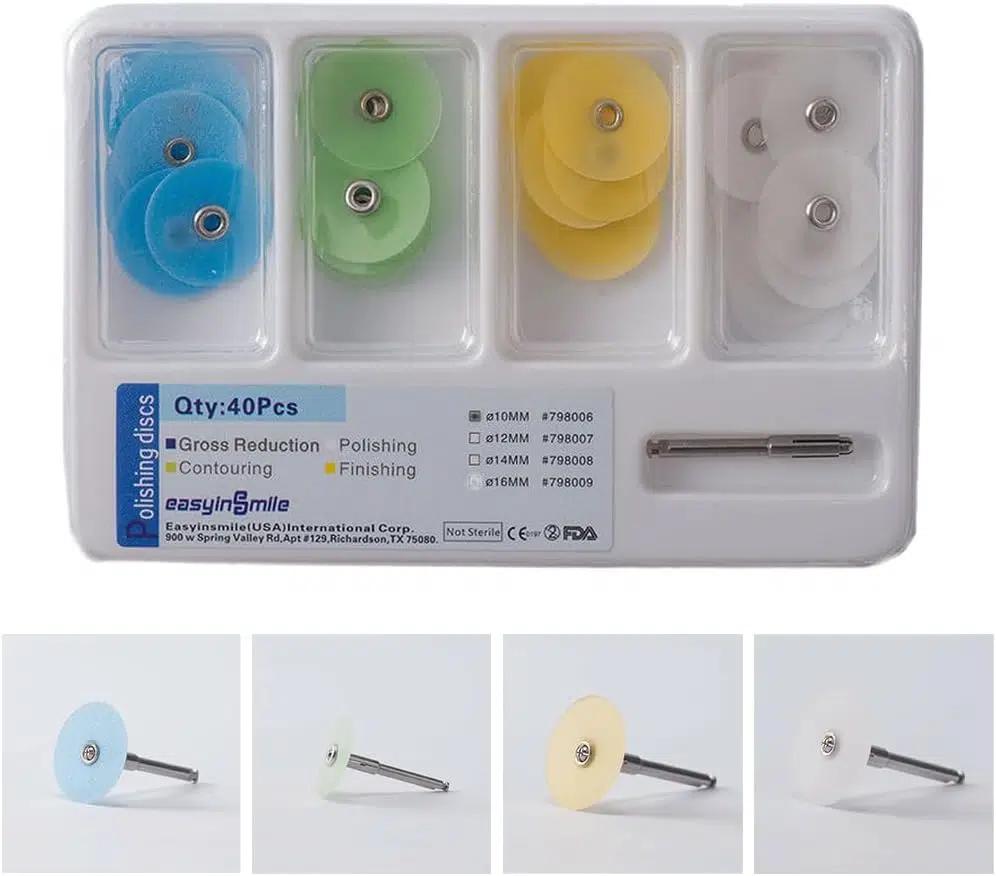
Table of Contents
- Core Clinical Applications of Finishing Discs
- Composite Restoration Contouring
- Ceramic and Indirect Restoration Adjustment
- Grit Progression and Workflow Protocol
- Coarse to Medium Grits: Shape and Contour
- Fine to Super-Fine Grits: Smoothing and Polishing
- Auxiliary Tools in Restorative Workflows
- Occlusal and Facial Alignment
- Shade Matching and Clean-Up
- How to Choose the Right Abrasive Finishing Disc
- Price in Pakistan for Finishing Discs
- Frequently Asked Questions
- Can abrasive finishing discs be autoclaved and reused?
- What handpiece speed is recommended for finishing discs?
- How do I prevent damaging adjacent teeth during interproximal finishing?
- Why is a water spray necessary during composite finishing?
Understanding the clinical abrasive finishing disc uses is essential for any dental professional aiming for excellence in restorative dentistry. Whether you are shaping direct composite fillings or contouring ceramic veneers, selecting the right rotary instrument directly impacts marginal integrity, soft tissue health, and long-term restoration success. In modern clinical practice, clinicians rely on high-performance consumables like the Abrasive Finishing Disc to transition seamlessly from gross reduction to a mirror-like finish. This comprehensive guide explores the diverse applications, grit progressions, and best practices for incorporating these versatile tools into your daily workflow.
Core Clinical Applications of Finishing Discs
The primary purpose of flexible finishing systems is to refine anatomical contours without gouging the tooth structure or damaging adjacent proximal surfaces. Because direct restorative materials undergo polymerization shrinkage and require careful margin adjustment, these discs allow precise control during the final stages of placement.
Composite Restoration Contouring
When placing Class III, IV, or V composite resins, recreating natural surface texture and smooth cavosurface margins is critical. Coarser grits are typically employed to reduce excess restorative material at the gingival and interproximal margins. Medium and fine grits then eliminate microscopic scratches left by carbide burs, paving the way for a smooth transition that prevents plaque accumulation and marginal staining.
Ceramic and Indirect Restoration Adjustment
While diamond burs handle heavy bulk reduction on crowns, inlays, and onlays, fine abrasive disks are indispensable for smoothing internal line angles and adjusting contact areas. For more extensive contour work outside the mouth, technicians often pair these with items found in a specialized Polishing Kits Dental Amalgam setup or dedicated ceramic polishing systems to achieve uniform luster across different substrate types.
Grit Progression and Workflow Protocol
A structured, step-by-step approach is mandatory to prevent surface degradation during finishing and polishing. Skipping grit sizes often leaves deep scratches that cannot be easily buffed out during the final gloss stage.
Coarse to Medium Grits: Shape and Contour
Coarse and extra-coarse variants are designed for rapid removal of excess composite, correction of over-contoured margins, and primary occlusal adjustment. Care must be taken near the free gingiva to avoid soft tissue laceration. Utilizing proper patient management accessories like Mouth Props helps maintain a stable, accessible working field throughout these initial reduction steps.
Fine to Super-Fine Grits: Smoothing and Polishing
Once the correct anatomy is established, transition to fine and super-fine discs. These finer abrasive particles remove microscopic surface irregularities, creating a smooth surface that feels natural to the patient's tongue. For a deeper dive into alternative rotary tools, you can review our Polishing Brushes Buying Guide for Pakistani Clinics to understand how bristle brushes and rubber cups complement disc protocols.
Auxiliary Tools in Restorative Workflows
Finishing a restoration rarely involves a single instrument type. Clinicians often rely on a multidisciplinary kit of accessories to ensure structural harmony and accurate aesthetics.
Occlusal and Facial Alignment
Ensuring proper facial contour and occlusal plane orientation is just as important as smooth margins. Instruments like the Dental Fox Plane assist practitioners in evaluating the maxillary occlusal plane relative to the interpupillary line during complex anterior rehabilitations.
Shade Matching and Clean-Up
Achieving lifelike aesthetics starts with accurate shade selection using tools such as an Acrylic Shade Guide before any preparation begins. Later, during endodontic retreatment or post-placement cleanup, auxiliary liquids like GP Solvent help clear away unwanted debris, ensuring your workspace remains pristine before final polishing steps with an Abrasive Finishing Disc.
How to Choose the Right Abrasive Finishing Disc
Selecting the ideal finishing system for your dental practice or laboratory requires evaluating several key parameters:
- Backing Material: Look for flexible polyester or paper backings that bend easily around tooth contours without tearing.
- Attachment Mechanism: Mandrel-mounted systems (snap-on vs. screw-on) must securely lock into your contra-angle handpiece without wobbling at high RPMs.
- Grit Range: Ensure the kit includes a complete sequence from coarse down to super-fine to streamline your clinical steps.
- Diameter Size: Smaller diameters (e.g., 8mm to 10mm) offer superior access to subgingival and interproximal areas, while larger diameters (12mm to 14mm) expedite facial surface smoothing.
Price in Pakistan for Finishing Discs
When purchasing dental supplies across Pakistan, pricing for rotary finishing systems varies based on import origin, box quantity, and manufacturing brand.
- Economy Packs: Locally distributed or budget-imported packs generally feature basic paper-backed discs sold in bulk quantities. These suit high-volume dental teaching institutions and budget-conscious community clinics.
- Premium Systems: High-end flexible discs—often featuring metal-free centers and tear-resistant polymer backings from international brands—sit at a higher price point.
Overall, pricing is heavily driven by the durability of the abrasive coating, the quality of the mandrel connection, and whether the discs are autoclavable or intended for single-use patient safety.
Frequently Asked Questions
Can abrasive finishing discs be autoclaved and reused?
Most standard flexible abrasive discs are designed for single-use to ensure optimal cutting efficiency and prevent cross-contamination. Reusing them can lead to worn abrasive coatings and wire mandrel slippage.
What handpiece speed is recommended for finishing discs?
Low to medium speeds (typically between 10,000 to 20,000 RPM) are recommended when using these discs. High speeds can generate excessive frictional heat, potentially damaging the dental pulp or distorting the composite resin.
How do I prevent damaging adjacent teeth during interproximal finishing?
Using a protective metal matrix band or selecting a smaller diameter disc helps shield the adjacent tooth structure. Intermittent strokes and continuous water spray also prevent accidental enamel abrasion.
Why is a water spray necessary during composite finishing?
Water cooling prevents thermal trauma to the pulp and flushes away debris, maintaining clear visibility of the margin. Dry finishing can cause overheating and premature clogging of the disc surface.
References
- PubMed Central — National Institutes of Health
- PubMed — National Library of Medicine