
Clinical Guide to Power Chain Elastomeric Uses in Orthodontics
Discover the essential clinical applications, selection criteria, and placement techniques for orthodontic elastomeric chains in daily practice.
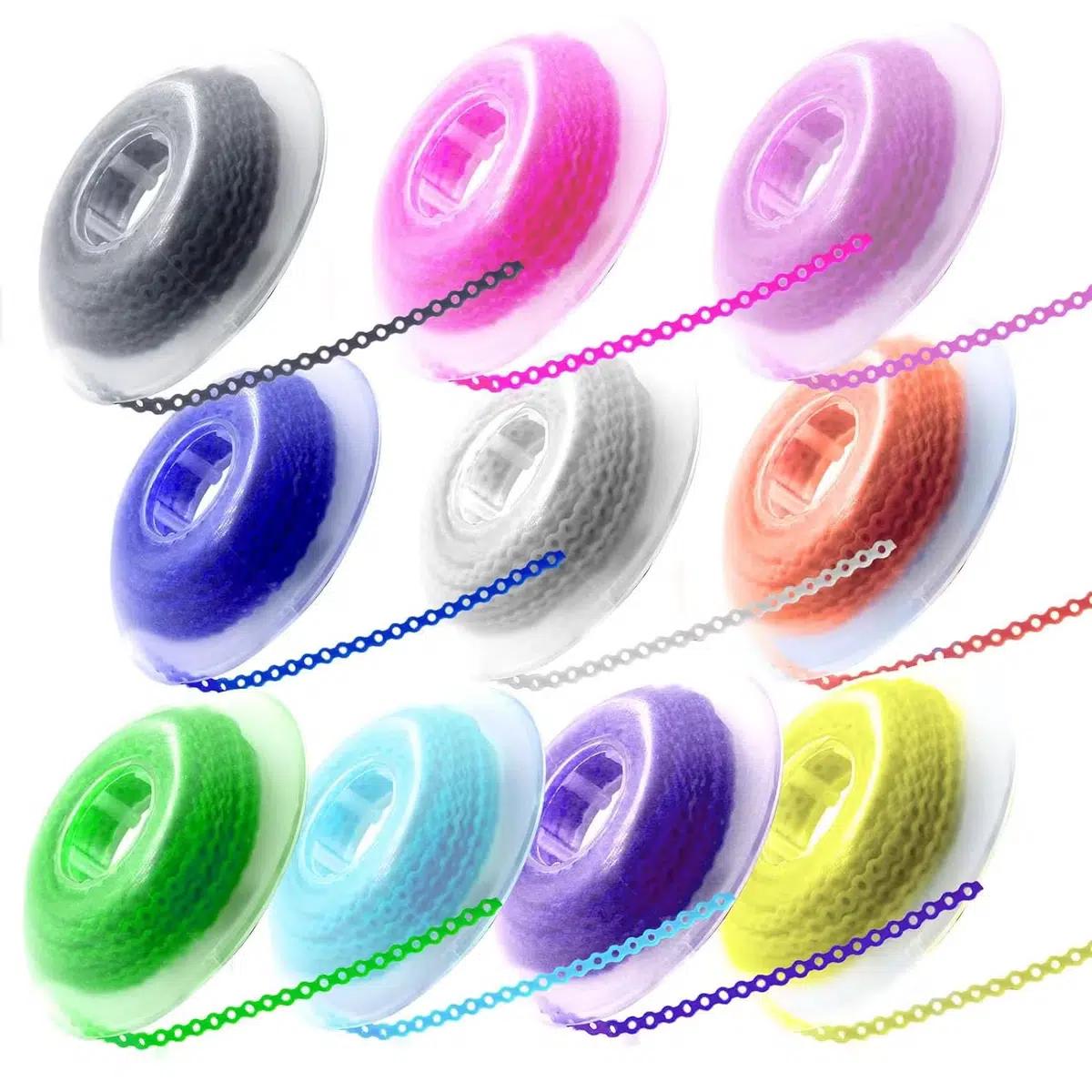
Table of Contents
- Clinical Guide to Power Chain Elastomeric Uses in Orthodontics
- Mechanical Principles and Force Degradation
- Force Decay Dynamics
- Spatial Configurations
- Primary Clinical Applications
- Space Closure and Diastema Management
- Rotation Correction and Midline Alignment
- Arch Leveling and Irregularity Resolution
- How to Choose the Right Elastomeric Chain
- Material Composition and Color Stability
- Spool Length and Dispensing Hygiene
- Product Specifications
- Price in Pakistan
- Cost Drivers
- Sourcing and Inventory Management
- Frequently Asked Questions
- How often should power chains be changed during treatment?
- Do clear power chains stain easily?
- What is the difference between closed, short, and long power chains?
- How can clinicians prevent the chain from slipping off brackets?
Clinical Guide to Power Chain Elastomeric Uses in Orthodontics
Understanding the various power chain elastomeric uses in a modern orthodontic practice is essential for achieving efficient, predictable tooth movement during comprehensive case finishing. Elastomeric chains are continuous loops of polyurethane links that apply continuous mechanical force to align arches, close spaces, and correct rotations. Whether you are managing generalized spacing or finishing detailing phases, selecting the correct configuration of these chains directly impacts treatment duration and patient comfort. In this guide, we will explore the core mechanical principles, structural variations, clinical applications, selection considerations, and pricing trends across Pakistan for these everyday orthodontic supplies.
Mechanical Principles and Force Degradation
Elastomeric materials rely on elastic memory to exert continuous force on dental structures. Unlike standard elastomeric ligatures that simply hold the archwire inside the bracket slot, continuous chains distribute tensile force across multiple brackets simultaneously.
Force Decay Dynamics
Polymers used in orthodontic elastomers experience significant force relaxation over time, especially in the warm, humid environment of the oral cavity. Approximately 50 to 60 percent of the initial force is lost within the first 24 hours, followed by a more gradual decline over the remaining weeks. Understanding this degradation pattern dictates the standard clinical recall interval for changing components.
Spatial Configurations
Manufacturers produce these chains in three standard spacings to accommodate different inter-bracket distances and clinical objectives:
- Closed (Continuous): Links touch each other directly, generating higher initial force concentrations suited for tight space closure.
- Short (Modified): Small spaces between individual loops, balancing force delivery and flexibility.
- Long (Wide): Extended segments between loops, utilized for lower initial force levels or when spanning wider gaps.
Primary Clinical Applications
Orthodontists incorporate continuous chains across various stages of fixed appliance therapy. Knowing the specific mechanical advantages of each application ensures optimal clinical outcomes.
Space Closure and Diastema Management
Closing extraction sites or generalized spacing represents the most frequent application in daily practice. By engaging the chain from the molar hook or second premolar forward to the canine or incisor brackets, clinicians apply a sliding mechanics vector. When managing more complex anchorage units during these movements, some practitioners pair mechanics with specialized instrumentation like the Orthodontic Nance Plier to adjust transpalatal arches and maintain dimensional stability.
Rotation Correction and Midline Alignment
Minor dental rotations can be efficiently managed by applying asymmetric force couples using short or closed chain segments. Similarly, aligning dental midlines often requires cross-arch or intra-arch elastic configurations. For fine-tuning inter-arch relationships alongside your continuous chains, keeping reliable auxiliaries such as the Intra Oral Elastic (A Star) stocked in your clinic ensures you can address vertical and sagittal discrepancies simultaneously.
Arch Leveling and Irregularity Resolution
During intermediate alignment stages, minor vertical corrections and leveling steps benefit from continuous light forces. Before advancing to heavy continuous mechanics, ensure your initial arch setup is secure by placing an Orthodontic Separator effectively to establish proper molar separation for band adaptation.
How to Choose the Right Elastomeric Chain
Selecting the ideal supply for your practice involves evaluating material composition, physical dimensions, and patient compliance factors.
Material Composition and Color Stability
Modern chains are fabricated from high-grade medical polyurethane that resists permanent deformation. However, pigmentation from dietary sources such as coffee, tea, and curry causes significant staining over a four-week span. Clear and light gray options offer aesthetic discretion initially, though silver and gray chains retain their visual appeal longer in patients with high-staining diets.
Spool Length and Dispensing Hygiene
Products supplied on continuous spools offer excellent value and custom length cutting, reducing waste. When dispensing material chairside, secure placement requires precision instruments. Using a dedicated Mathieu Plier with TC Tip allows clinicians to grip, stretch, and hook the elastomeric loops securely over bracket tie-wings without slipping.
Product Specifications
To standardize your inventory, evaluate the tensile strength, elasticity retention, and thickness before bulk ordering. Premium options maintain predictable stretch profiles throughout the adjustment cycle. You can browse reliable stock variants directly through our catalog listing for the Power Chain Elastomeric to match your clinic's structural preferences.
Price in Pakistan
Dental clinics and orthodontic practices across Pakistan source elastomeric materials through specialized dental marketplaces. The typical market price for a standard spool of continuous chain varies based on several distinct factors.
Cost Drivers
- Material Grade: Premium medical-grade polyurethane engineered for superior color stability and low force relaxation commands a higher price point than standard industrial-grade polymers.
- Brand Origin: Imported medical supplies from established global orthodontic manufacturers generally cost more than local or unbranded regional alternatives.
- Length per Spool: Standard spools typically contain 15 feet (approx. 4.5 meters) of material, which directly dictates the cost-per-patient calculation.
Sourcing and Inventory Management
Buying in bulk or standardizing your clinic inventory through trusted local distributors helps manage supply overhead. For clinics expanding their procedural offerings into restorative finishing alongside orthodontics, reviewing equipment guidelines such as Polishing Kits Dental Amalgam: How to Choose provides additional cross-disciplinary insights for comprehensive practice management.
Frequently Asked Questions
How often should power chains be changed during treatment?
Chains experience substantial force decay within the first three to four weeks in the oral cavity. Therefore, clinicians typically replace them at every regular adjustment appointment, usually every 4 to 6 weeks, to maintain consistent biological tooth movement.
Do clear power chains stain easily?
Yes, clear and light-colored elastomeric materials absorb pigments from foods, beverages, and tobacco products over time. Patients with high-staining diets are often advised to choose silver, gray, or dark-colored chains to maintain a cleaner appearance between appointments.
What is the difference between closed, short, and long power chains?
The primary difference lies in the distance between individual loops. Closed chains have touching links for maximum initial force, short chains have minimal spacing, and long chains feature wider gaps designed for lower initial force delivery across larger spans.
How can clinicians prevent the chain from slipping off brackets?
Secure placement requires using precision instruments such as a specialized Mathieu plier to stretch and engage the loops fully under the bracket tie-wings. Ensuring proper ligation technique prevents premature dislodgment during mastication.
References
- PubMed Central — National Center for Biotechnology Information
- PubMed — National Library of Medicine